🔥 Modulify.ai - Design Webflow sites with AI


Dive deep into our recent blog post featuring expert insights and valuable information for SaaS enthusiasts.
.svg)
I've reviewed hundreds of design portfolios. Some hiring managers, others are helping friends prepare for interviews. The pattern is painfully consistent: talented designers sabotage themselves with portfolios that showcase everything except what matters.
Here's the uncomfortable truth. Your portfolio isn't an art gallery. It's not a complete archive of your career. It's a sales document with one job—convincing someone you can solve their specific problems. Most portfolios fail because designers build them for themselves instead of their audience.
Forget what you think impresses people. I've sat in enough hiring discussions to know what actually moves candidates forward. Hiring managers want to see three things: that you understand problems before jumping to solutions, that you can articulate your thinking clearly, and that you've shipped real work that made a measurable impact.
Pretty mockups matter far less than you'd expect. Everyone can make something look polished in Figma. The differentiator is demonstrating that your design decisions connect to business outcomes. Did the redesign increase signups? Did the new flow reduce support tickets? These questions determine who advances.
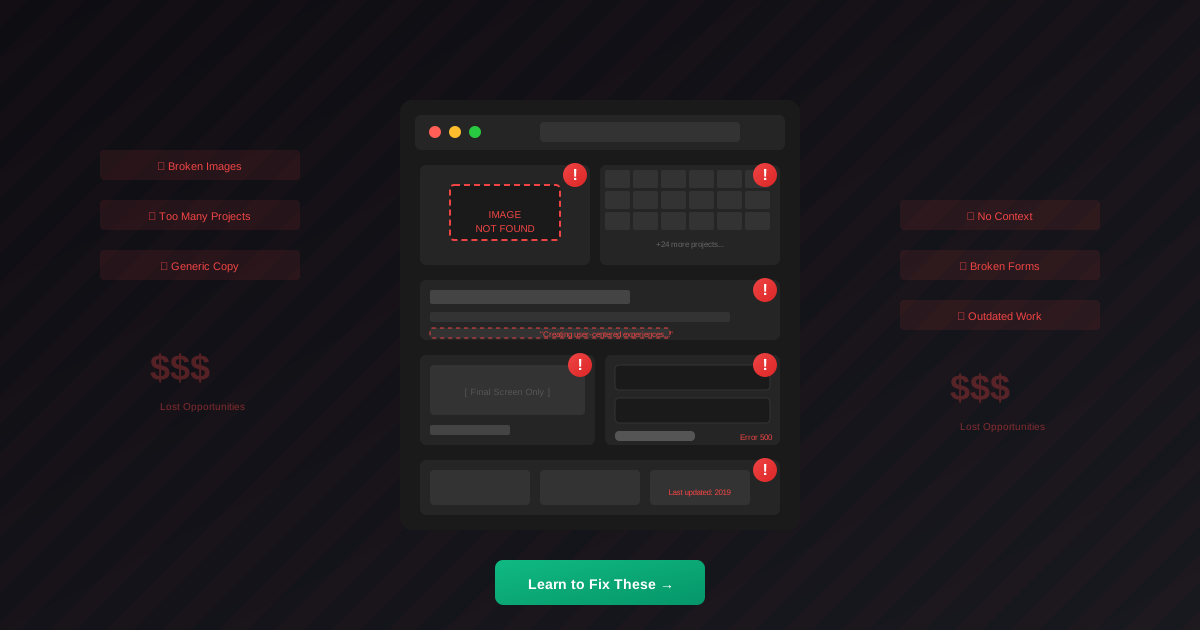
The instinct to show everything is understandable but wrong. A portfolio with fifteen projects suggests you can't edit. It signals poor judgment about what's actually impressive. Worse, it dilutes attention from your strongest work.
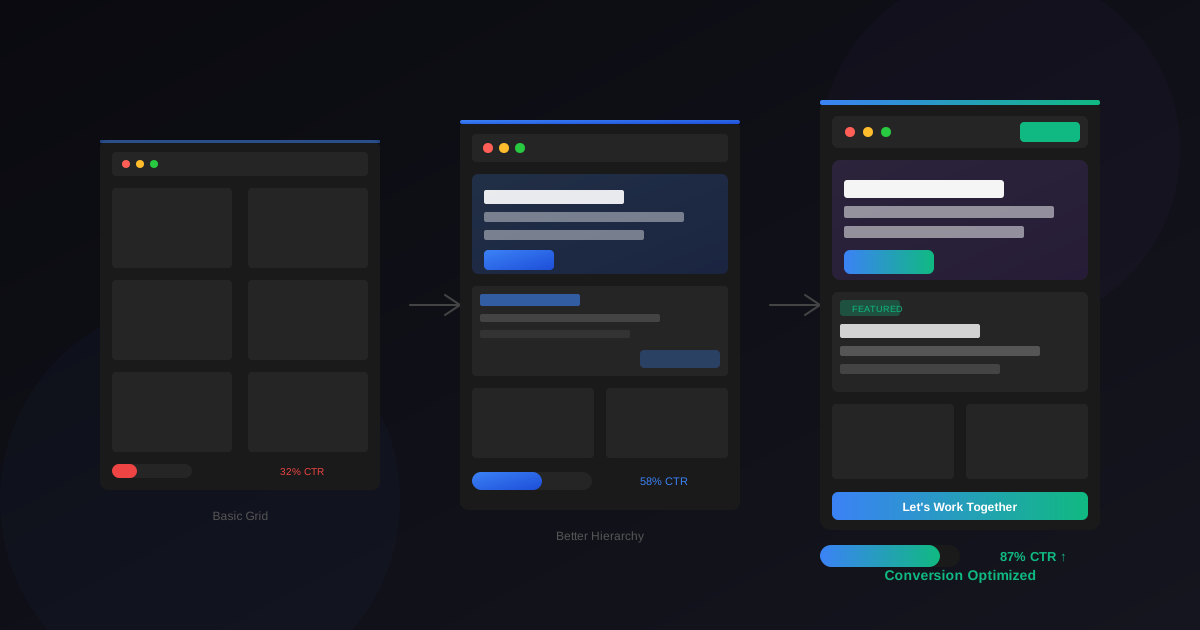
Three to five excellent case studies outperform twenty surface-level project thumbnails every time. Each case study should demonstrate a range—different problem types, industries, or constraints. But depth beats breadth. I'd rather see one thoroughly documented project than five with just final screens.
The case study format exists because it works. But most designers execute it poorly—either burying the important parts or making readers work too hard to find them.
Start with context, not visuals. What company? What problem? What constraints? Hiring managers need orientation before they can evaluate your decisions. A beautiful hero image means nothing without understanding the challenge it addresses.
Then walk through your process, but edit ruthlessly. Nobody needs to see every wireframe iteration or every research artifact. Show the pivotal moments—the insight that shifted direction, the constraint that forced creativity, the decision point where multiple paths existed.
Every strong case study follows this arc, whether explicitly labeled or not. Problem: what challenge existed and why did it matter? Solution: What did you create and why those specific choices? Impact: What changed because of your work?
This framework forces clarity. If you can't articulate the problem clearly, maybe you didn't understand it deeply enough. If you can't explain why your solution over alternatives, maybe the decisions were arbitrary. If you can't point to impact, maybe the work didn't matter as much as you thought.
Most portfolio copy reads like it was written by committee—corporate, vague, and forgettable. "I collaborated with stakeholders to deliver user-centered solutions." Please. That sentence could describe anyone doing any design job ever.
Write like you're explaining the project to a smart friend over coffee. Be specific. Name the actual challenges. Describe the real constraints. Share the genuine moments of uncertainty or insight. Personality isn't unprofessional—it's memorable.
Your portfolio website itself demonstrates your capabilities. Slow loading times, broken responsive behavior, or awkward interactions undermine every case study you present. If you can't execute a simple portfolio well, why would anyone trust you with their complex product?
Mobile experience deserves real attention. Hiring managers often review portfolios on phones—during commutes, between meetings, in airport lounges. A portfolio that's frustrating on mobile costs you opportunities from people who never made it to your best work.
Three to five strong case studies is ideal. Quality and depth matter more than quantity.
Only if it's still relevant and impressive. Old work that no longer represents your abilities actively hurts you.
Describe the challenge and process without revealing confidential details. Use anonymized screens or abstract the visuals while keeping the thinking visible.
A custom site can demonstrate skills, but execution quality matters more than originality. A well-implemented template beats a poorly executed custom design.
Starting a portfolio from scratch? Wonderlist's 30 portfolio Figma templates give you professional foundations to customize—so you can focus on your case studies instead of layout decisions
Latest Insights
Dive into our blog to discover insightful articles covering a variety of topics tailored for SaaS platforms.


Design By OwlsTech Service